
Best C8 Corvette Engine Bay Customization Ideas for 2026
Table of Contents
- Why the C8 Corvette Engine Bay Deserves Your Attention
- C8 Corvette Clear Engine Cover: Show Off the Mid-Engine
- C8 Corvette Custom Painted Engine Bay Parts
- What Is Hydro Dipping on Car Parts?
- C8 Corvette Engine Bay Accessories That Complete the Look
- Engine Bay vs. Interior: Where to Spend First
- Conclusion: Building an Engine Bay That Turns Heads
- Frequently Asked Questions
Last Updated: October 15, 2026
Why the C8 Corvette Engine Bay Deserves Your Attention
The C8 Corvette flipped the script on American performance cars. With the engine behind the driver, Chevrolet turned the mid-engine compartment into a display case, and the best C8 Corvette engine bay customization ideas start with what people see when the rear hatch opens.
You don’t have to tear the car apart to make that compartment stand out. Most of the best upgrades are covers, panels, and accents that sit right on top of what’s already there.
Key Takeaway
The C8’s mid-engine layout makes the engine bay a focal point at every car show. Cosmetic upgrades that layer over factory components give you the biggest visual return with the least risk.
The C8’s mid-engine layout makes the engine bay a focal point at every car show. Cosmetic upgrades that layer over factory components give you the biggest visual return with the least risk.
C8 Corvette Clear Engine Cover: Show Off the Mid-Engine
A C8 Corvette clear engine cover replaces the factory solid lid with a transparent panel, letting people see the engine itself instead of a painted slab.
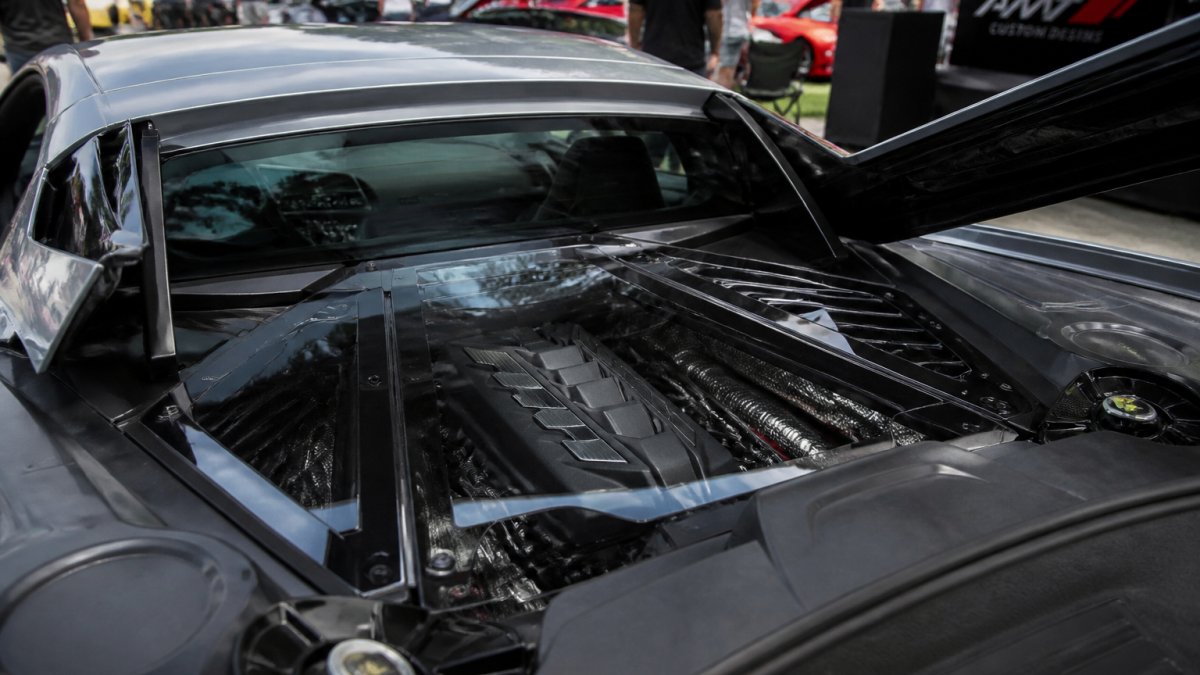
Chevrolet’s own design language leans into this. The Chevrolet Corvette official model information highlights the mid-engine layout as the car’s defining feature, and a clear cover puts that engineering on display rather than hiding it.
What to Look for in a Clear Cover
Fitment matters more than anything else. A cover that doesn’t seat properly will rattle, fog, or collect dust in the gaps.
- Model year and trim compatibility. C8 Stingray, Z06, and E-Ray layouts differ, so confirm the cover is built for your specific configuration.
- Material clarity. Look for a panel that resists yellowing from engine heat and UV exposure.
- Edge sealing. A clean gasket keeps moisture and debris out of the compartment.
A common mistake is buying on looks alone. The engine bay gets hot, and a cover that wasn’t built for it will show it within a season.
C8 Corvette Custom Painted Engine Bay Parts
Custom painted engine bay parts let you carry your car’s exterior color, or a contrasting accent, into the compartment. This is where a C8 stops looking like every other C8 and starts looking like yours.
Color-Matched Covers and Panels
Color-matching ties the whole car together. If your Stingray wears Rapid Blue, a matching engine cover and surrounding panels make the compartment feel intentional instead of stock.
We build these finishes in-house, and that matters for consistency.
Custom Graphics and Decals
Graphics are the fastest way to make a part unique. A subtle logo, a stripe, or a one-off design turns a generic upgrade into a signature piece, and it’s a low-commitment way to test a look before committing to paint.
Pro Tip
Order graphics and paint at the same time. Matching a new painted panel to graphics you already own is far harder than having both produced together, and it avoids a color mismatch you can’t unsee at a show.
Order graphics and paint at the same time. Matching a new painted panel to graphics you already own is far harder than having both produced together, and it avoids a color mismatch you can’t unsee at a show.
What Is Hydro Dipping on Car Parts?
Hydro dipping is a finishing process that floats a printed film on water and uses water pressure to wrap that pattern around a three-dimensional part. It lets curved, complex shapes take on carbon-fiber, camouflage, or custom patterns that paint alone can’t reproduce.
For engine bay work, hydro dipping is appealing because so many components have awkward curves. A flat decal won’t wrap a contoured cover cleanly. A dipped finish will.
The trade-off is durability. Hydro-dipped parts live in a hot, dirty environment, so the quality of the clear coat over the pattern decides how long it lasts.
C8 Corvette Engine Bay Accessories That Complete the Look
C8 Corvette engine bay accessories are the details that finish the job once the big pieces are in place. Covers and panels set the theme; accessories make it look deliberate.
The Accessory Set, Item by Item
- Trunk upper and lower covers. These dress the storage area behind the cabin. Because the C8’s rear compartment sits directly against the engine bay, this area is visible whenever the hatch is open at a show, and bare factory plastic reads as unfinished next to a dressed engine cover.
- Door sill covers. These protect the factory door sills from the scuffs that come with every entry and exit. They’re among our best sellers because the sill takes constant abuse and is visible every time a door opens. A cover preserves the factory finish underneath rather than replacing it.
- Door props and hood props. These add a functional touch that also reads as custom, holding the panel where you want it when the compartment is open and stable for hours at a show.
Fitment by Model Year and Trim
Fitment is where accessory shopping goes wrong. The C8 has been built across multiple model years, and Stingray, Z06, and E-Ray configurations differ in the rear compartment and surrounding trim.
Before ordering, confirm three things:
- Model year. Panel shapes and attachment points have changed across the generation.
- Trim and powertrain. The Z06 and E-Ray bring their own compartment layouts, so accessories marketed for a Stingray are not automatically a match.
- Coupe versus convertible. The rear deck and storage area differ, and that changes which covers and inserts fit.
A part that doesn’t seat properly will rattle, trap debris in the gaps, or sit proud of the surrounding trim, none of which is visible in a product photo.
Installation Effort and Reversibility
Most of these accessories are low-effort installs. The common pattern is a part that layers over the factory surface using existing attachment points or automotive-grade adhesive, so the original component stays in place underneath.
That layering approach has two benefits. Installation is a short job with basic hand tools rather than a shop visit, and it’s reversible: if you sell the car or change direction, the factory finish is still there.
Pro Tip
Order accessories in one batch when you can. Finish matching is far easier when the parts are produced together, and it avoids the situation where a cover ordered six months later reads slightly off next to the pieces you already installed.
Order accessories in one batch when you can. Finish matching is far easier when the parts are produced together, and it avoids the situation where a cover ordered six months later reads slightly off next to the pieces you already installed.
How These Materials Hold Up in the Compartment
The rear compartment sees heat, dust, and UV exposure, which separates a part that still looks sharp after three seasons from one that fades.
Maintenance is simple: keep the compartment dry, wipe surfaces after shows, and avoid harsh solvents that dull a clear coat.
Cosmetic, Not Mechanical
Everything in this section is cosmetic and protective. These parts layer over factory components; they do not alter engine output, airflow, or tuning, and they require no change to how the car runs.
That distinction matters: cosmetic upgrades generally don’t raise the warranty questions mechanical modifications can, though it’s worth confirming with your dealer on a car still under coverage.
| Accessory | What It Does | Installation Effort | Best For |
|---|---|---|---|
| Trunk upper and lower covers | Dress the storage area behind the cabin | Low | Finishing a compartment that is visible at shows |
| Door sill covers | Protect factory sills from scuffs | Low | Daily-driven cars and show cars alike |
| Door and hood props | Hold panels open and stable | Low | Owners who display the car with the hatch open |
| Tonneau inserts | Tidy the compartment and carry the theme | Low | Tying the rear area to the engine bay finish |
| Custom graphics | Personalize any of the above | Low | Making a set of parts uniquely yours |
Best For
Owners who have the big pieces in place and want the compartment to look finished from every angle, including the areas people see when the hatch and doors are open.
Owners who have the big pieces in place and want the compartment to look finished from every angle, including the areas people see when the hatch and doors are open.
Engine Bay vs. Interior: Where to Spend First
Most guides stop at a list of ideas. The harder question is order: what goes on first, what waits, and how you know when a build is done. Here’s a framework you can work from.
Start With the Focal Point
If your budget only stretches to one area right now, start with the engine bay. It’s the part of a C8 that draws a crowd at a show and separates the car from a front-engine Corvette at a glance.
From there, the natural sequence is theme, then detail:
- Reveal. A clear cover puts the engine on display.
- Theme. Color-matched or patterned covers and panels establish the look.
- Detail. Accessories, graphics, and interior accents carry that look through the rest of the car.
Each step builds on the last. Skipping to detail work before the theme is set tends to produce a compartment that looks busy rather than intentional.
Why the Interior Is the Right Second Move
The interior comes second, and it’s a better second move than most owners expect. Door sill covers, inserts, and accents are the details passengers notice every time they get in, and they’re typically easier to install than engine bay pieces.
There’s a practical argument for sequencing this way, too. Engine bay work sets the color and finish direction for the whole car; once that’s locked, interior pieces can be matched with confidence.
A Build-Order Framework
Think in tiers rather than one big purchase:
- Tier one: the reveal. The single piece that changes how the compartment reads. For most owners, that is the clear cover.
- Tier two: the theme. Painted or patterned covers and panels that lock in a color direction.
- Tier three: the details. Accessories, graphics, and interior accents that make the car feel finished from every angle.
Working through the tiers in order means every purchase fits the one before it, and you can spread the build across seasons without ending up with parts that clash.
How to Decide Between Two Options
When you’re weighing two upgrades and can only pick one, run them through four questions:
- Visibility. How often will people see it? A part visible every time the hatch or a door opens earns its place faster than one only seen at a show.
- Reversibility. Does it layer over the factory part, or replace it? Layered parts keep your options open.
- Finish match. Can it be produced in your car’s color or a pattern that fits the theme? A near-match is worse than a deliberate contrast.
When the Build Is Done
A build is done when the car looks consistent from every angle someone actually sees: the engine bay with the hatch open, the sills with the doors open, and the storage area behind the cabin.
Our take: build the engine bay first for the show-stopping impact, then layer in interior accents to make the car feel finished from every angle.
Best For
Owners planning their first round of upgrades who want maximum visual impact before committing to a full build.
Owners planning their first round of upgrades who want maximum visual impact before committing to a full build.
Conclusion: Building an Engine Bay That Turns Heads
The hard part isn’t finding ideas. It’s choosing the right order so each upgrade builds on the last instead of fighting it.
That’s exactly what we do at AMT Custom Designs. We craft GM Licensed Corvette accessories in-house, from clear engine covers and engine bay dress-up packages to custom painted and hydro-dipped finishes, plus door props, tonneau inserts, and interior accents.
Get started with AMT Custom Designs and build an engine bay that turns heads at every show you roll into.
Frequently Asked Questions
Are clear engine covers worth it for the C8 Corvette?
For owners who want to show off the mid-engine layout, a C8 Corvette clear engine cover is one of the most visible upgrades you can make. It lets the engine detail stay on display at car shows instead of hiding under a solid panel. Quality matters: look for covers that are made for your specific model year and trim so fitment stays tight and the finish holds up over time.
What is hydro dipping on car parts?
Hydro dipping is a finishing process that floats a printed film on water and transfers it onto a prepared part, so the pattern wraps around curves and edges evenly. On engine bay parts, it can create carbon-fiber looks, camouflage, or custom graphics that paint alone cannot easily achieve. The part is then cleared and cured.
What are the most popular C8 Corvette engine bay accessories?
The most requested items tend to be clear engine covers, custom painted or hydro dipped covers, upper and lower trunk covers, and door props that hold panels open at shows. Door sill covers are another favorite because they protect the factory sills while adding a custom look. Many owners combine a few pieces at a time, then add more as their build evolves.
Can you add custom graphics to C8 Corvette engine covers?
Yes. Custom graphics can be applied to engine covers and other bay panels so the design is unique to your car rather than a mass-produced look. You choose the artwork, color, and finish, and the graphics are worked into the part itself. This is a common choice for owners who want their C8 to stand apart at car meets without changing how the engine performs.